The Grace of Kings (2015)
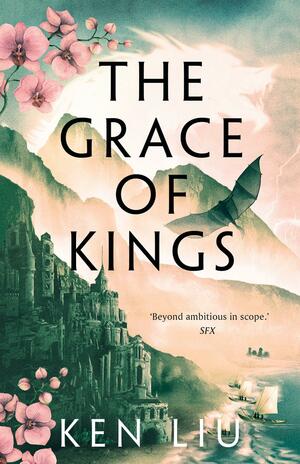
Author: Ken Liu
Format: Digital
The Grace of Kings is a fantasy retelling of the fall of the Qin Dynasty and the Chu-Han Contention. The novel is set in the archipelago world of Dara and includes various fantasy elements (odd animals, etc), but the headliner oddity is the use of airships powered by a semi-magical gas. As the novel explains, the development of airship technologies (and therefore any sort of air power at all) was why Xana, the equivalent of Qin, was able to conquer all other Warring States. Otherwise, the story remains relatively grounded, with the only particularly supernatural elements being interventions from the various gods of Dara, who have taken sides in the conflict. Dara itself seems to take influence from an amalgamation of East Asian cultures, though obviously it takes the most direct inspiration from Imperial China.
The plot itself hews extremely close to the historical events of the Chu-Han Contention with more interpersonal flavour added - this made the early parts of the novel a bit rote since it fundamentally hit plot points I was familiar with, but as the characters are fleshed out over the course of the story the read becomes a lot more interesting. That said, I still don’t really remember the names of the protagonists and just remember them as Liu Bang / Xiang Yu. In this retelling, though, Liu Bang incidentally becomes a woke feminist king within what is otherwise presented as a fairly typical fantasy-ish patriarchical setting. It doesn’t detract from the story or anything (and generally plays into his more overt characterization as a trickster) but is pretty funny once it starts being brought up. At some point (minor spoiler) his wife cheats on him while he’s away and he decides that this is fine tbh, since he slept around on campaign a bit. Then the maid he’s talking to calls him a woke king. The novel shines in the (admittedly pretty brief) moments between characters and in the moments of character development as Liu Bang / Xiang Yu grapple with being rebels, then generals, and finally kings in their own right.
I found that the prose of the novel was a bit awkward to get used to - the story is told from a bit of a distance and goes rather quickly. The effect is that it reads a lot like a somewhat bland historical record (which I assume was the point), though at times, especially early on, it starts to feel like sloppy writing (especially in some characterization moments that were just the narrator stating that a character was undergoing character development). Once things started rolling and/or I acclimated to the style it was much more managable though.