Osman's Dream: The History of the Ottoman Empire (2005)
Author: Caroline Finkel
Format: Paperback
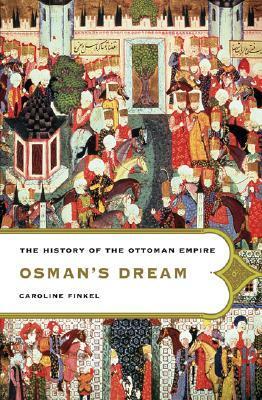
Osman’s Dream is a lengthly narrative history of the entirety of the Ottoman Empire, from its development as a steppe tribe in Anatolia to Ataturk’s consolidation of power following World War I. It’s hard to articulate the experience of reading this book; on the one hand, there is simply an enormous amount of material to cover and only so much paper you can bind into a single volume. On the other hand, the narrative inevitably takes such a high-level view of events that I was left wanting much more in-depth exploration of many historical event, even if just to provide more colour. At the same time, the book itself is overwhelmingly sloggy, despite being well-written technically - maybe this means that any diversions (say, to provide a deeper look into cultural aspects of Ottoman life, etc.) would be highly unwelcome in practice. However, the overwhelming sloggy-ness of the text does feel like it would be alleviated heavily by breaks in the ‘action’ to avoid having to simply read 30-40 dense pages of historical narrative at a time.
Overall, I think the experience of reading Osman’s Dream was still generally positive, even if it took me like four entire months. The main issue I had was, as mentioned, the lack of any sort of broader analysis of the historical narrative or breaks to explore more social aspects of Ottoman history (the focus is almost exclusively political/military). There are occasionally sections at the end of each chapter that somewhat ‘summarize’ the main trends in Ottoman history that have been explored over the last 30 pages, but there is little to no sense of any ‘grand arc’ of history that would help frame all of the minor rebellions, wars, etc.
Unrelatedly, Finkel’s discussion of the Armenian Genocide is fascinating - naturally there could only be ~1 page of text dedicated to it, but Finkel is very vague on the specific question of ‘genocide’ (she repeatedly states that research ‘needs to be completed’ for a historical decision to be reached). It’s very hard to tell if she’s hedging to make the book palatable to a wider audience or if in 2005 the historical consensus was truly different (or even if, now, the consensus is split). It’s especially interesting because she doesn’t hesitate to call out Turkish nationalist narratives of history in other parts of the book where relevant.