Rocannon's World (1966)
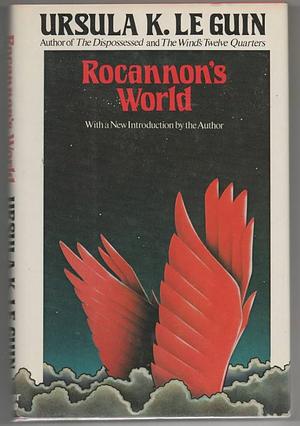
Author: Ursula K. Le Guin
Format: Hardcover
Rocannon’s World follows the ethnologist / anthropologist Rocannon, who works for the League of All Worlds in their infancy in their attempt to organize an cross-humanoid species alliance against an unnamed threat (not mentioned in the text, but this turns out to be the Shing from The City of Illusions). While performing his standard survey duties on a generically named planet, Rocannon’s entire team except for him is killed by a surprise strike from an internal rebellion. The remainder of the novel focuses on Rocannon’s journey across the planet with a small group of locals as he attempts to use the rebellion’s ansible to contact the League and help them destroy the rebellion. As a general rule, the planet’s native inhabitants are much more ‘primitive’ than the League - they seem to be just emerging from a quasi-feudal society when they are contacted by ambassadors from the League - and are reminiscent of many high fantasy settings, featuring (e.g.) elf-like and dwarf-like splinters of the humanoid branch of the species.
The highlight of the book was definitely the opening prologue for me, which is the best piece of sci-fi writing I’ve read in a long while (it was published independently as a short story as well). It follows a young princess on the planet, immediately following League contact, who attempts to reclaim a lost heirloom necklace. As it turns out, the necklace has been taken by the League as an anthropological artifact for display, though they happily return it once they are made aware of her claim to it. However, the League outpost containing the necklace is at least eight light-years away, so by the time she gets back home, her husband has died and her entire family has grown up. It’s such a good twist on both the classic mythological trope of “someone goes to the fairy realm and comes back to realize it’s been 300 years” and sci-fi stories involving relativity and time travel.
Also it’s nice to be reminded what actual good somewhat complex prose reads like ty Le Guin.