Soldiers and Ghosts: A History of Battle in Classical Antiquity (2005)
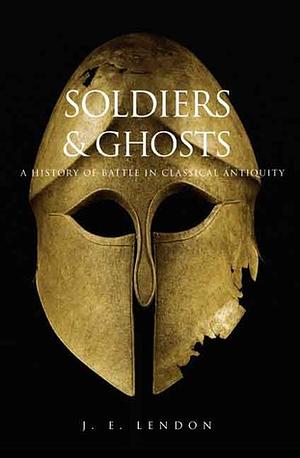
Author: J.E. Lendon
Format: Paperback
Soldiers and Ghosts is an extremely readable survey of the development of Greco-Roman militaries from the Bronze Age to late antiquity. The book is separated into two distinct and somewhat independent halves on the Greek and Roman militaries, respectively; each half is then separated into a series of case studies of different battles. The book itself ends up being much more of a study of the culture of war - a recurring theme is that military tactics / strategy were not solely determined by ‘technological superiority’ or military prowess, but rather, that the classical Greeks and Romans carried over many of their cultural ideals into the practice of war (even if it may have been “suboptimal”). In particular, Lendon emphasizes the role that the mythical ideal of Greek heroism played in Greek (and to a lesser extent, Roman) warfare as exemplified by the Iliad. There is a constant tension between the ideal of heroic single combat and the realities of war; that said, Lendon demonstrates that, for example, even a phalanx, seemingly one of the least individualized military formations possible, was built upon Greek ideals of heroism and masculinity (specifically, a culture of not being fleeing, which maintains unit cohesion).
The Roman half continues this exploration and emphasizes the tension between Roman ideals of virtus (individual glory) and disciplina (mostly exactly what it sounds like). However, past the first couple of battle case studies, the Roman half really began to feel quite repetitive in a way that the first half didn’t. Partly this seems to have been a product of poor sourcing - this half repeatedly emphasizes how few actual detailed descriptions of battles exist - but there didn’t seem to be much to the analysis other than the virtus-disciplina ension.
For anyone looking for a more detailed breakdown of individualized tactics and battles, this may not be the ideal book - while for someone with a more moderate interest in military history, this book hit all of the points it needed to, there are certainly more purely tactical histories available on all of the battles examined.